
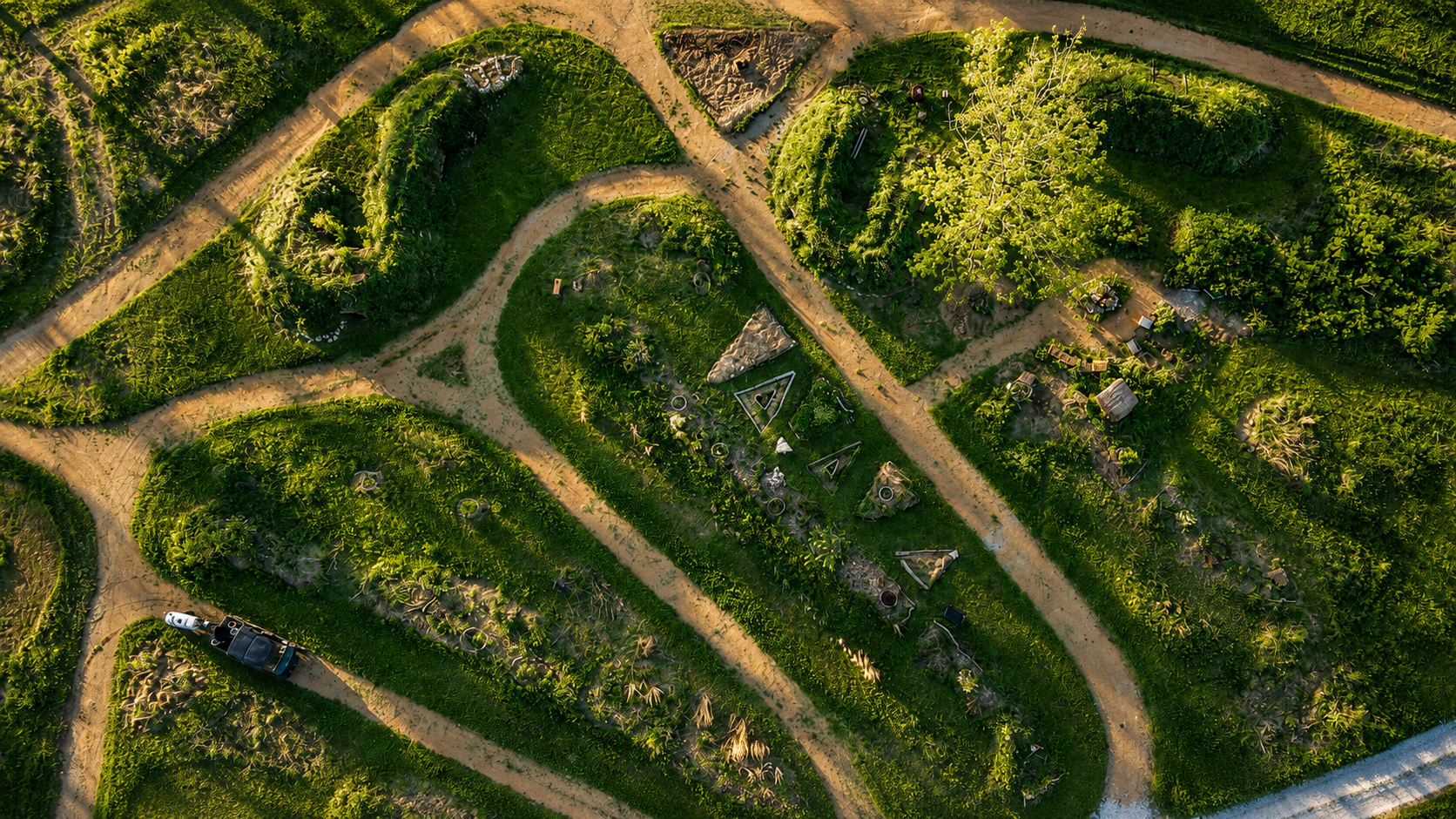
Integrated and Holistic Ecological Design
We help land stewards restore ecosystems, improve water cycles, and create productive, regenerative landscapes.
Our Core Services
We combine ecological design, GIS analysis, and field-based implementation to help land stewards understand, restore, and work with natural systems.
Most Requested
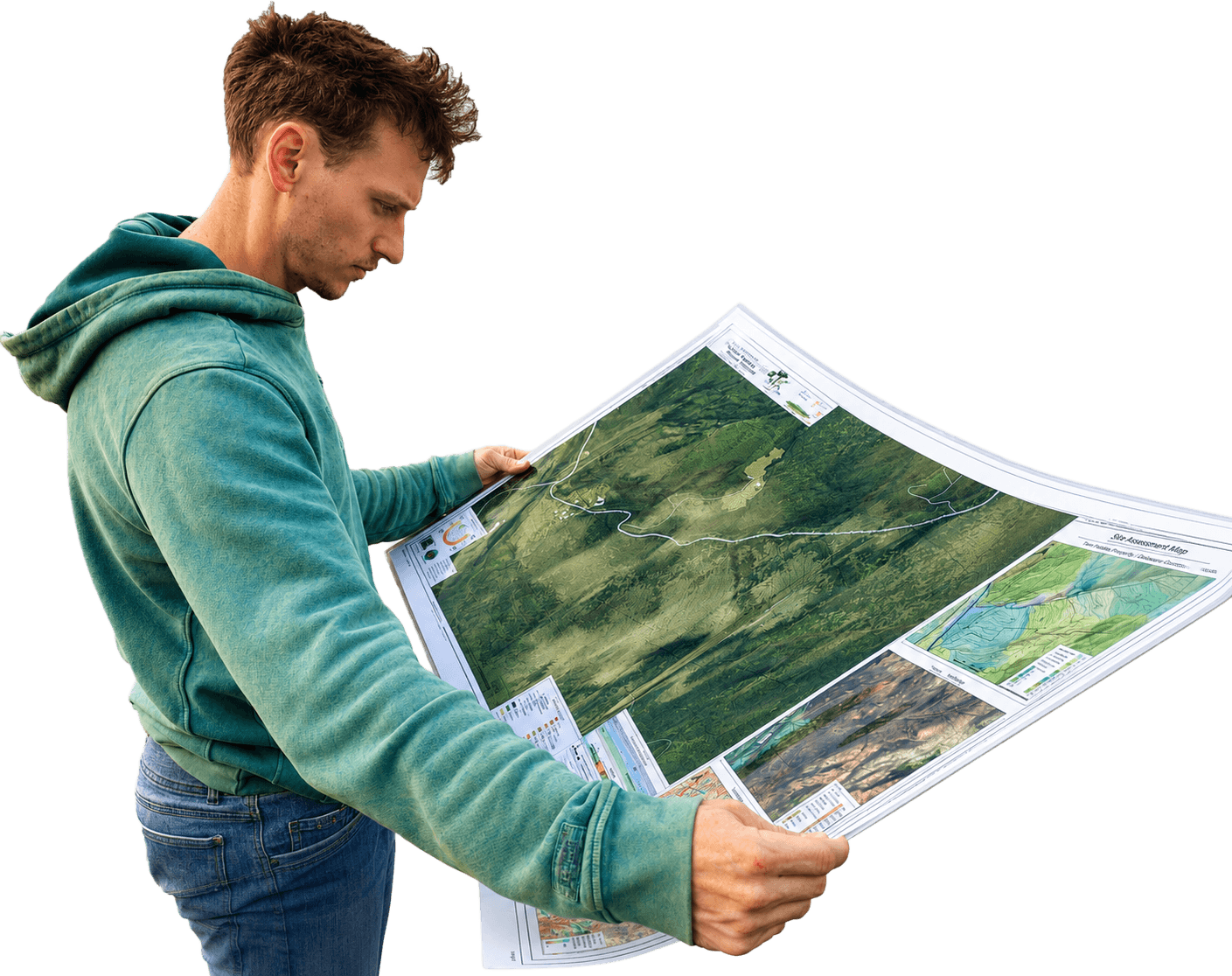
GIS, Land Analysis and Site Design
Reveal how your land actually functions.
Identify water flow, terrain constraints, and site-scale patterns to guide smarter design decisions.

Soil Regeneration and Microscopy
Understand the biology driving your soil.
Diagnose soil function and restore microbial systems to improve resilience, fertility, and plant health.
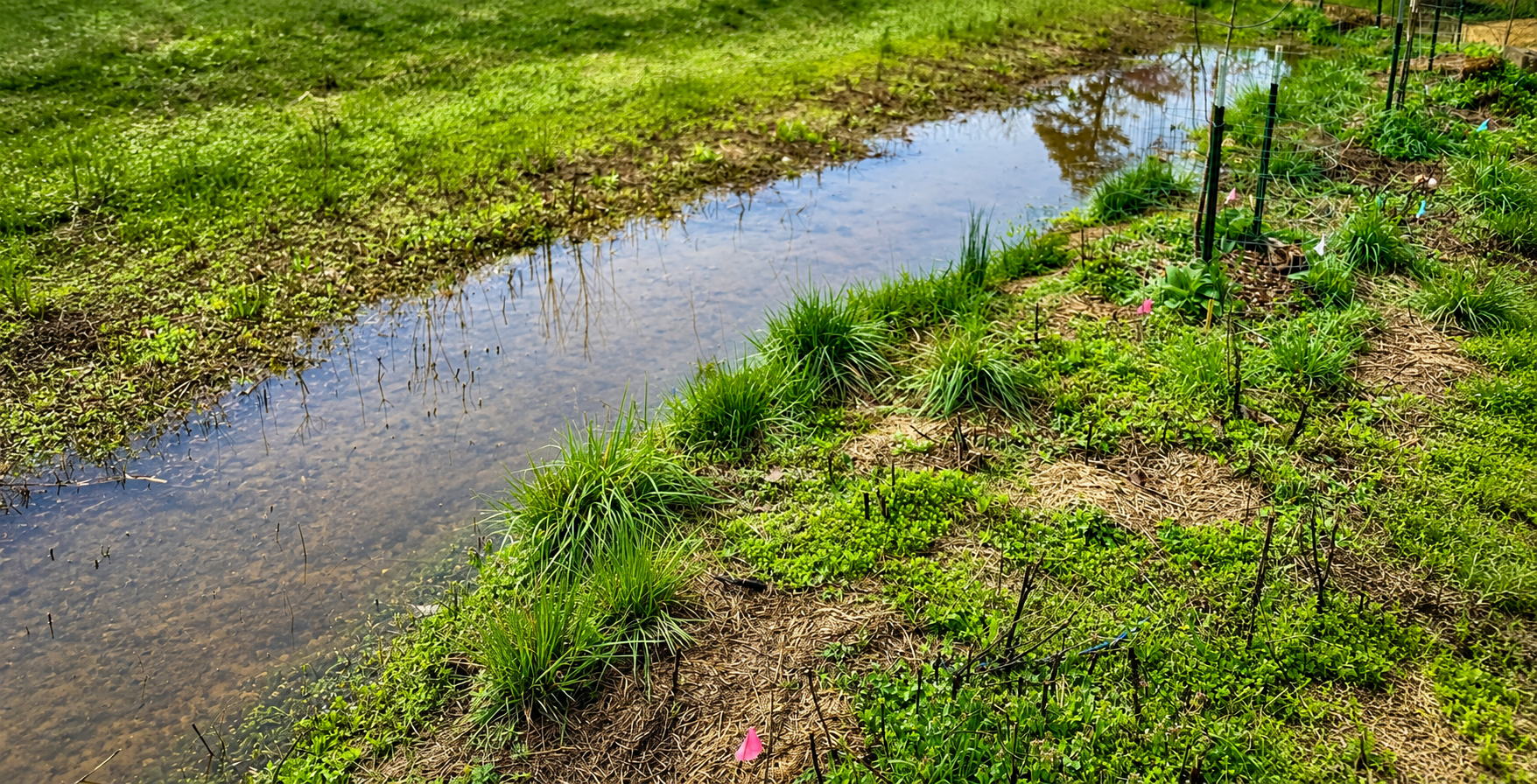
Water Cycle Regeneration and Earthworks
Rehydrate landscapes and manage water effectively.
Design systems that slow, spread, and sink water to restore hydrology and reduce erosion.
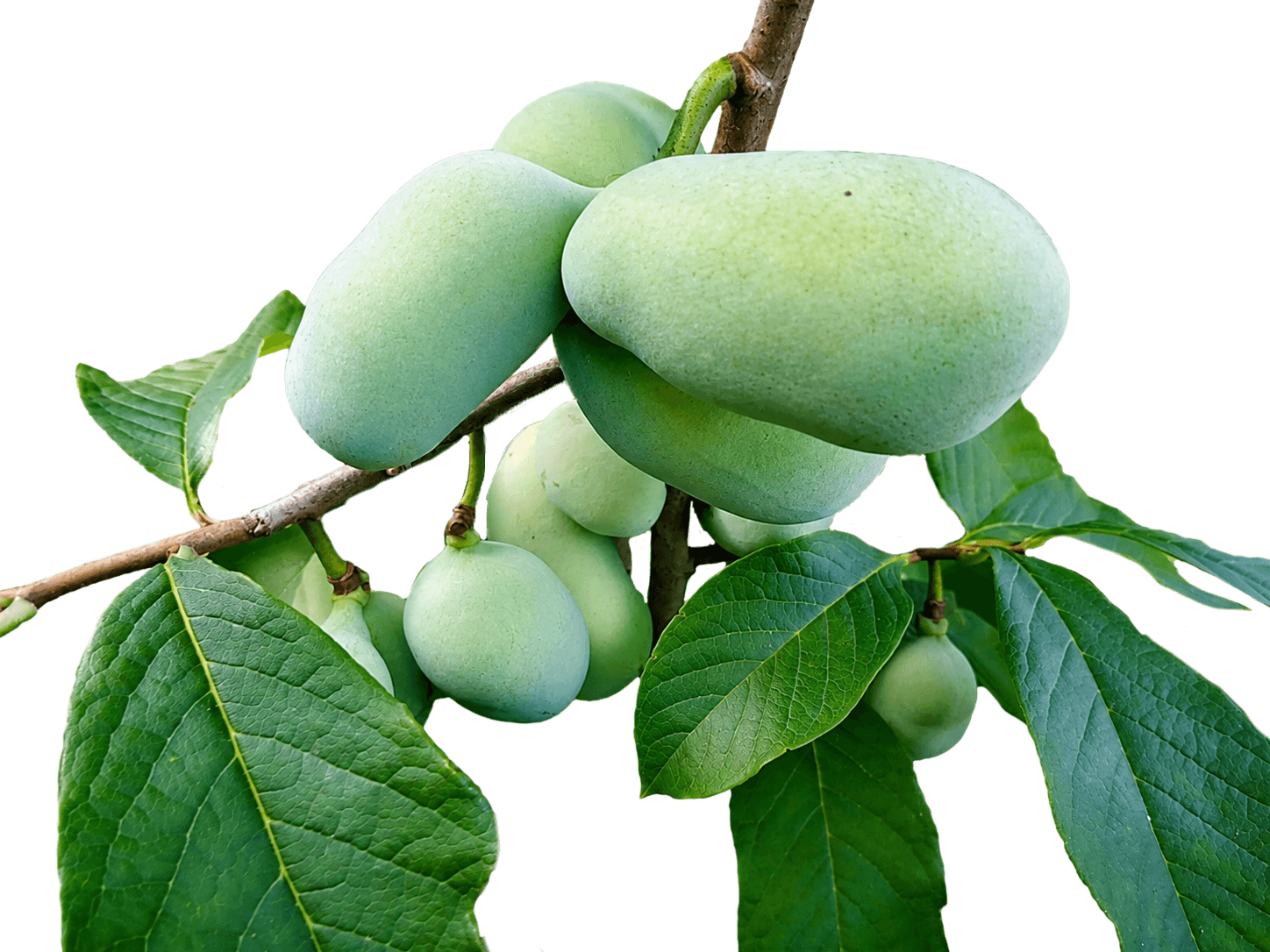
Ecological Design and Agroecology Services
Design productive systems that work with nature.
Create resilient landscapes that integrate food production, biodiversity, and long-term ecosystem health.
Our Design Process
We begin by analyzing your land to understand how water, soil, and terrain function. From these patterns, we develop a site-specific design, then support implementation with clear, field-ready guidance to ensure the plan translates effectively on the ground.
Analysis → Design → Implementation
Project Site Analysis
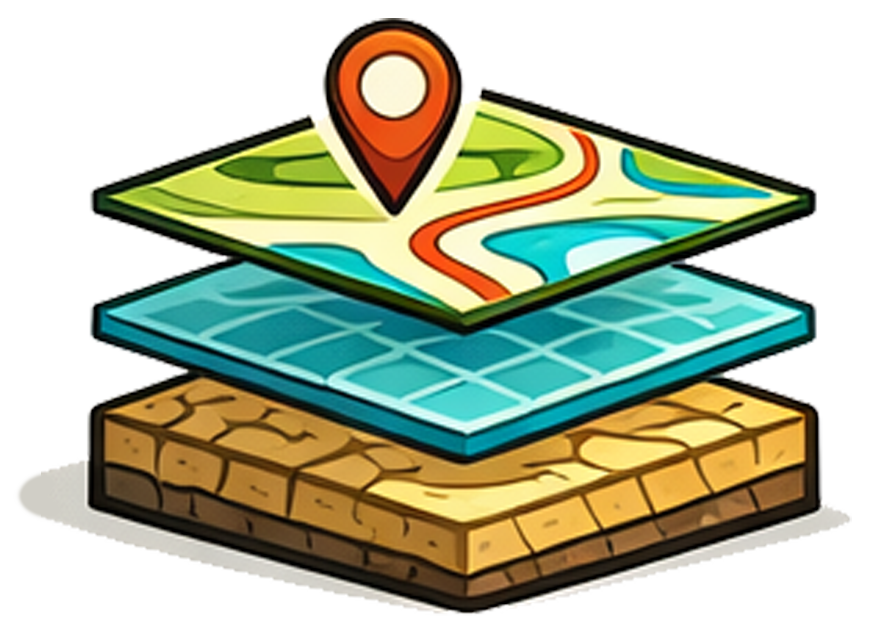
Understand how your land actually functions before making decisions.
• Land and resource analysis
• Hydrology and water movement
• Soil biology assessment
• High-resolution mapping
• Field-ready mobile navigation
Concept & Design

Translate patterns into clear, site-specific strategies.
• Design workflows and planning
• Site layout and system placement
• Hydrological and earthworks planning
• Integrated ecological design
• Full planting and production systems
Implementation Guidance
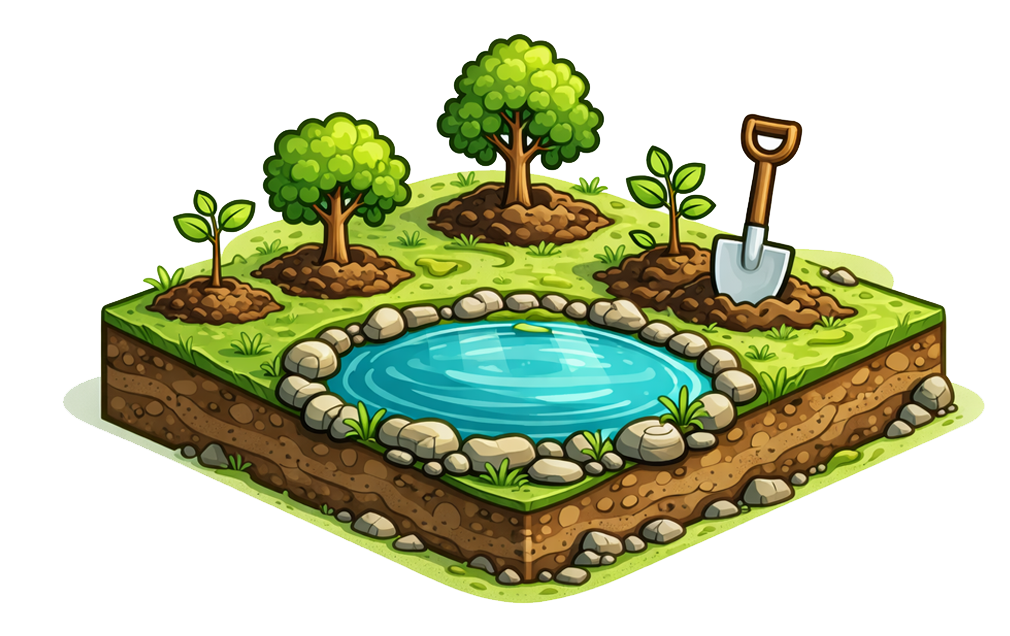
Bring the design into the field with clarity and confidence.
• Step-by-step implementation support
• In-field planting and navigation guides
• Cultivar and species selection
• Earthworks install guidance
• Ongoing soil regeneration support
This process ensures decisions are grounded in real conditions, aligned with ecological systems, and carried through to successful implementation.
Get started with a site analysis, soil diagnosis, or project consultation.
Integrated Ecological Design Services
Our services work together as part of a unified regenerative framework — from soil biology to watershed-scale planning.
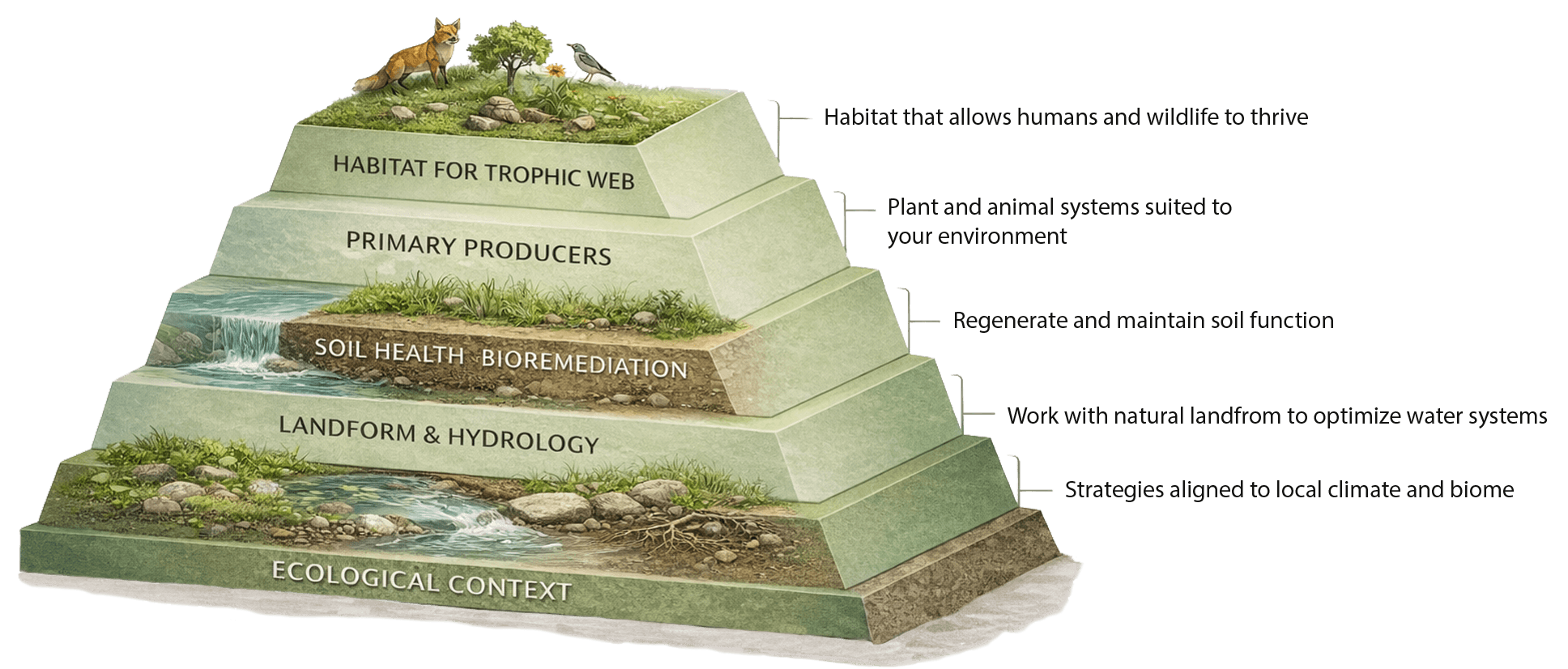
Ecological Design Framework
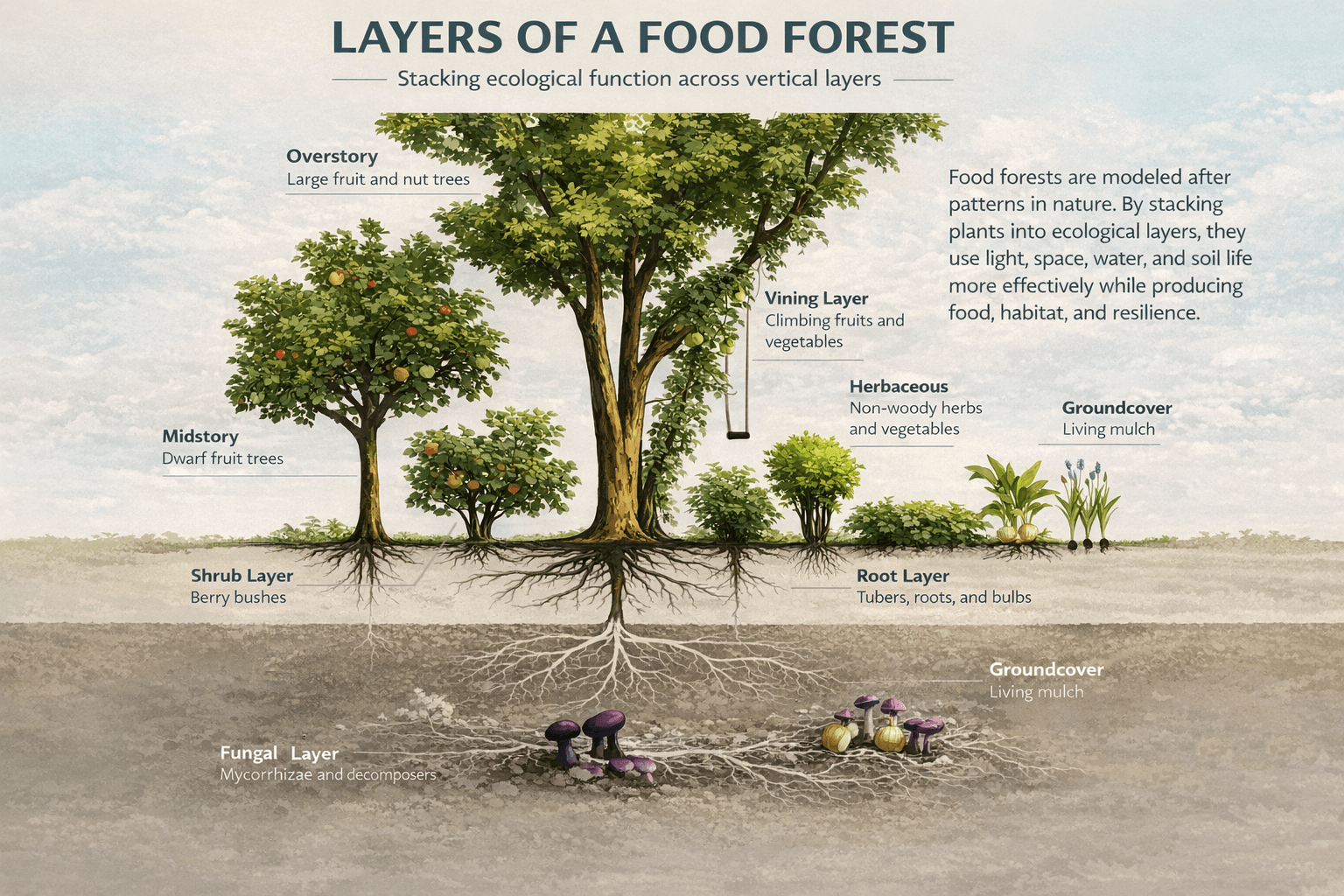
We approach land regeneration as a layered system, building from foundational conditions to fully functioning ecosystems.
United Designers International
Biodesic Strategies is a member of United Designers International, a global multi-disciplinary network of regenerative designers that consult on projects involving ecosystem restoration, farm & homestead design, agroforestry systems, and largescale site assessment & planning.
Restore the Life in Your Soil
Understand what’s limiting your soil—and how to restore it.
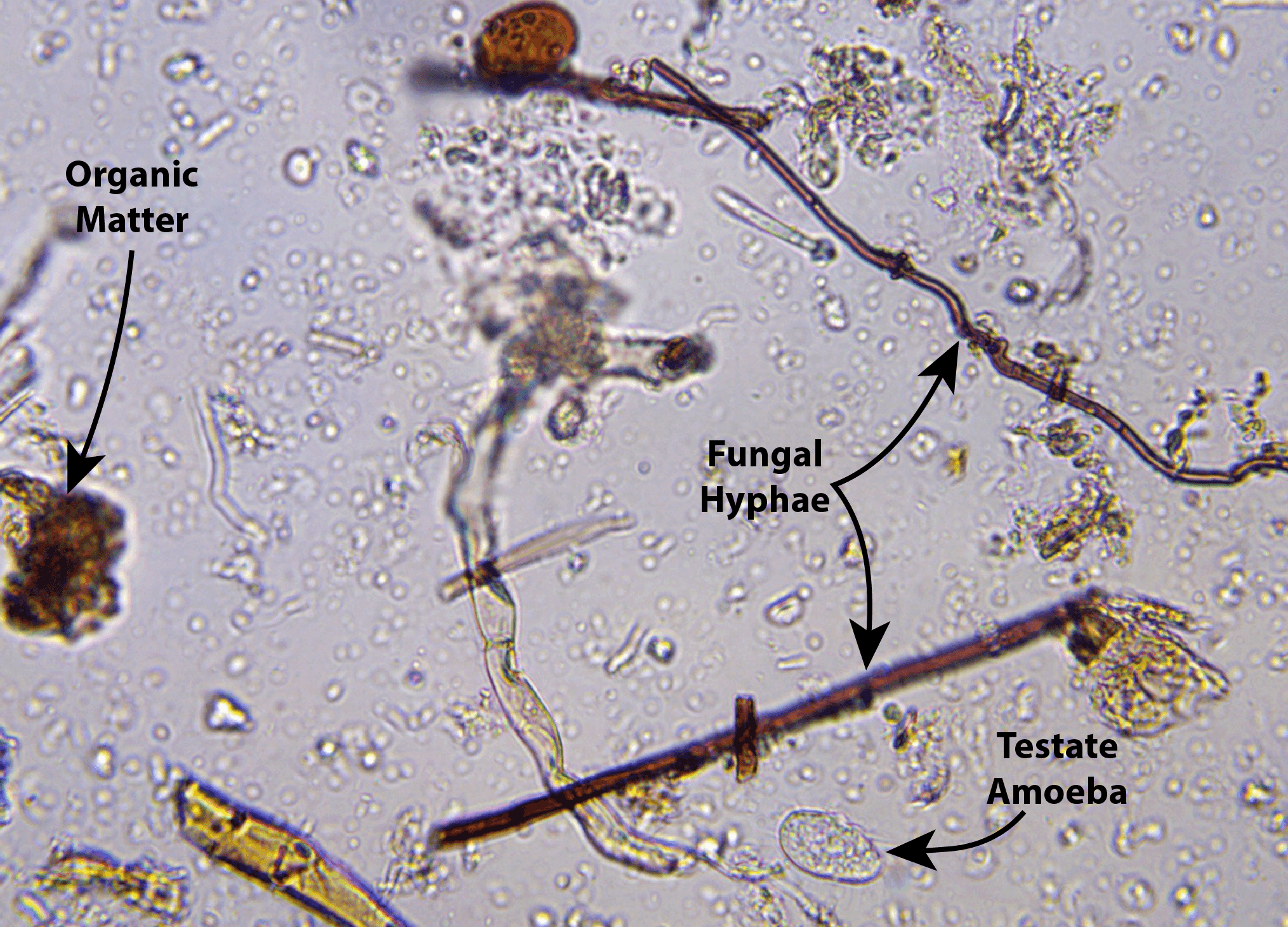
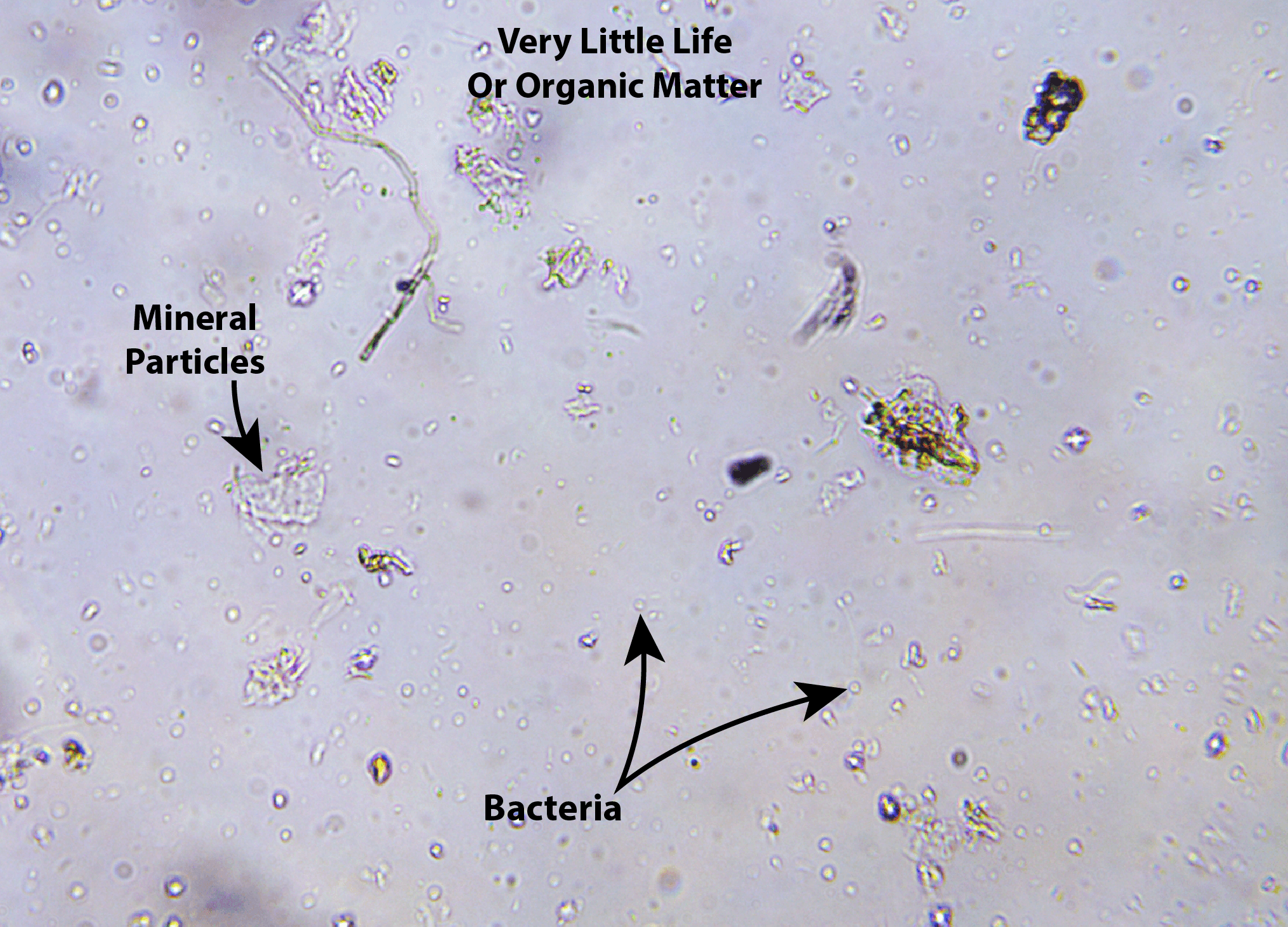
We use microscopy to assess biological abundance, fungal:bacterial ratios, and compost quality to guide practical strategies that improve fertility, resilience, and plant performance.
What We Measure
Biological activity and diversity in soil and compost
Balance between fungal and bacterial communities
Quality and functionality of biological amendments
What We Help You Do
Identify what’s limiting soil performance
Restore nutrient cycling and plant health
Build effective compost and amendment strategies
Apply biological inputs with confidence
Most soils already contain the nutrients plants need—the missing piece is biology.
See What the Land Is Actually Doing
Most land decisions are made without fully understanding how water, terrain, and microclimate interact.
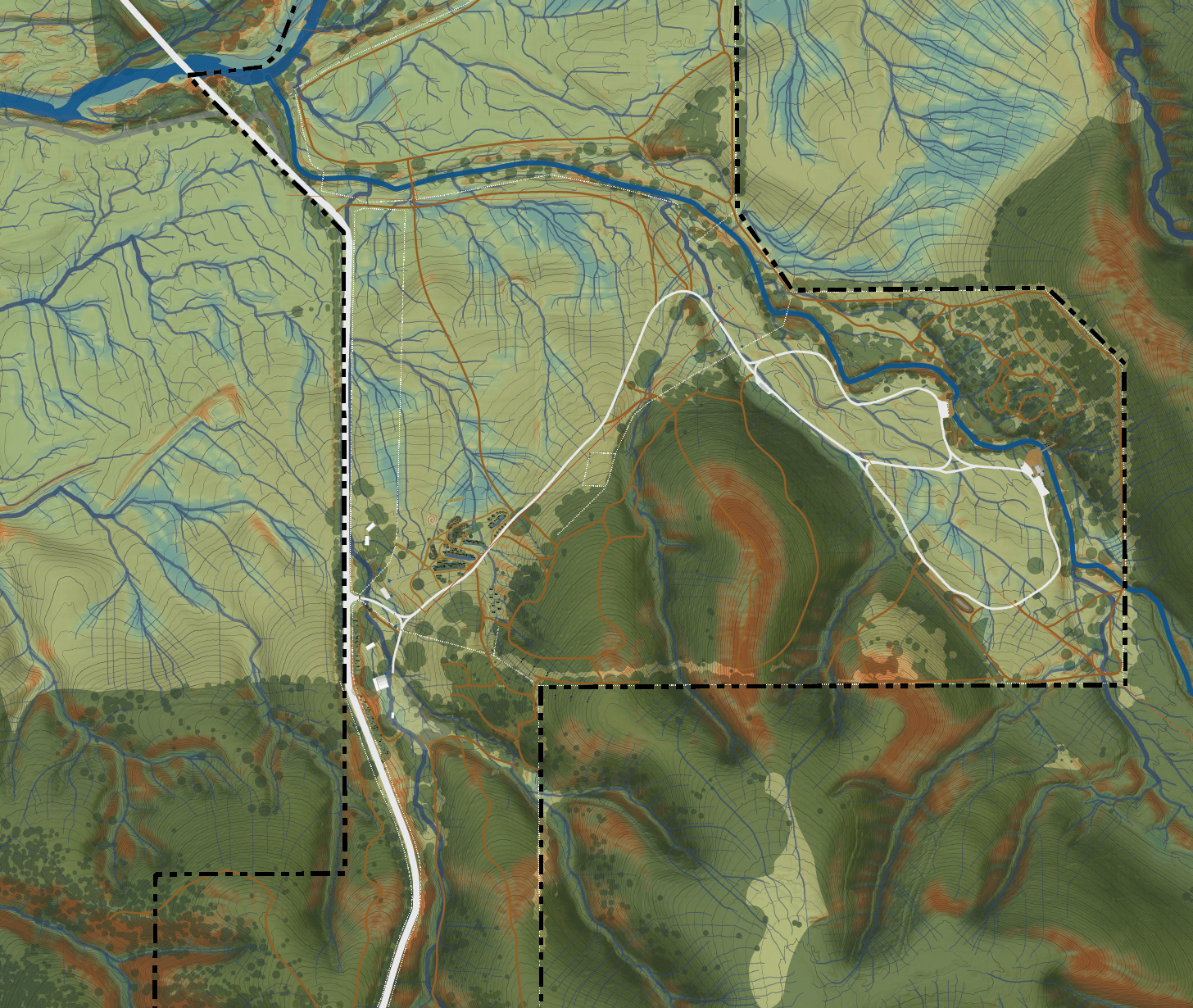
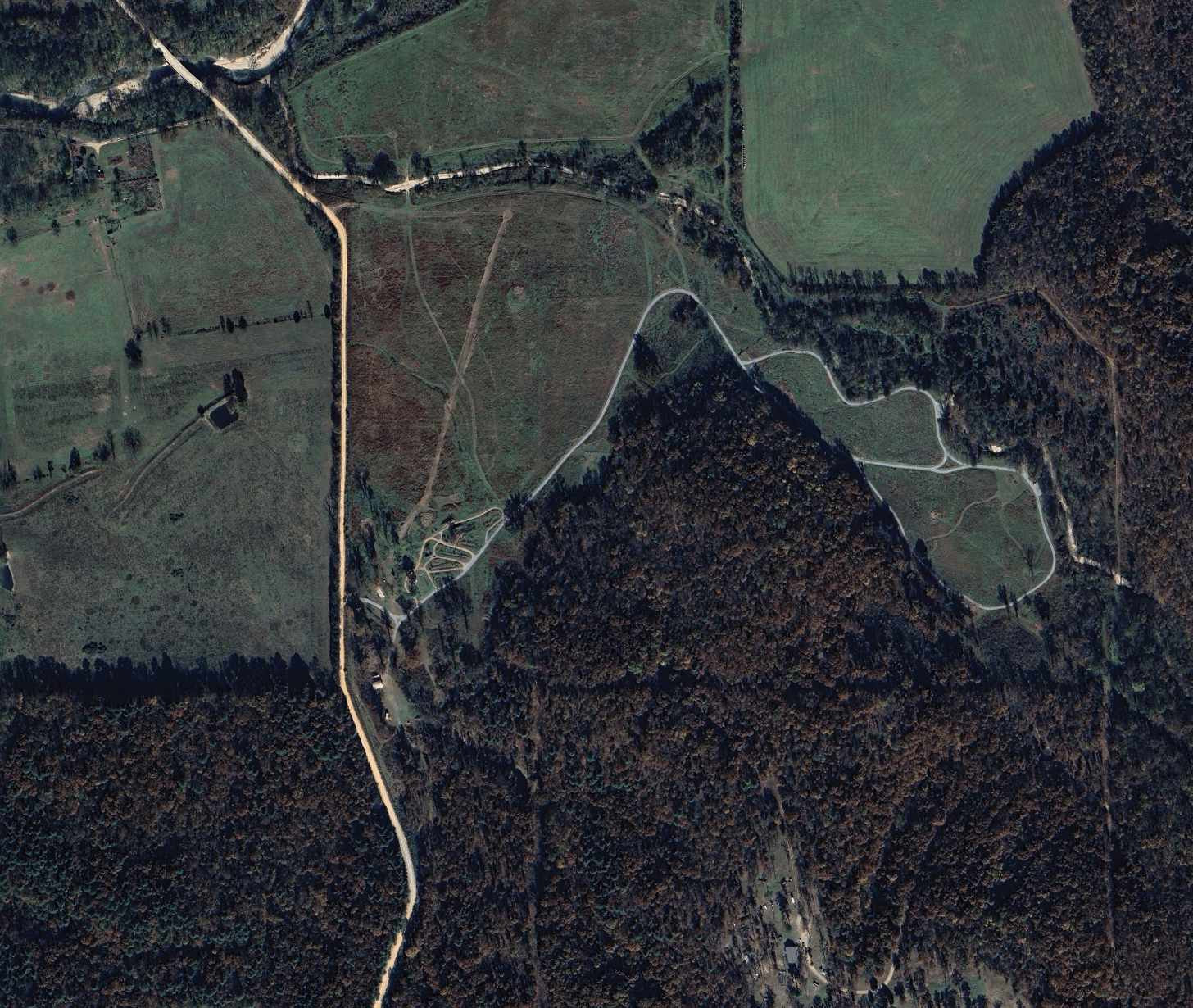
We use high-resolution GIS analysis to reveal the underlying patterns of your landscape—so design decisions are based on reality, not assumptions.
What These Maps Show
How water actually moves across your land
Where erosion, accumulation, and infiltration occur
Solar exposure, wind patterns, and cold air pooling
Terrain constraints and opportunities for design
Core Mapping Outputs
Elevation + contour maps
Slope and aspect analysis
Hydrology and drainage networks
Microclimate and solar radiation mapping
Relative elevation (REM) and cold air flow
These maps are not just reports—they’re designed to be used in the field, guiding real-time decisions through mobile mapping tools.
Work With Water—Not Against It
Water is the primary force shaping your land. If it’s unmanaged, it causes erosion, flooding, and lost potential.
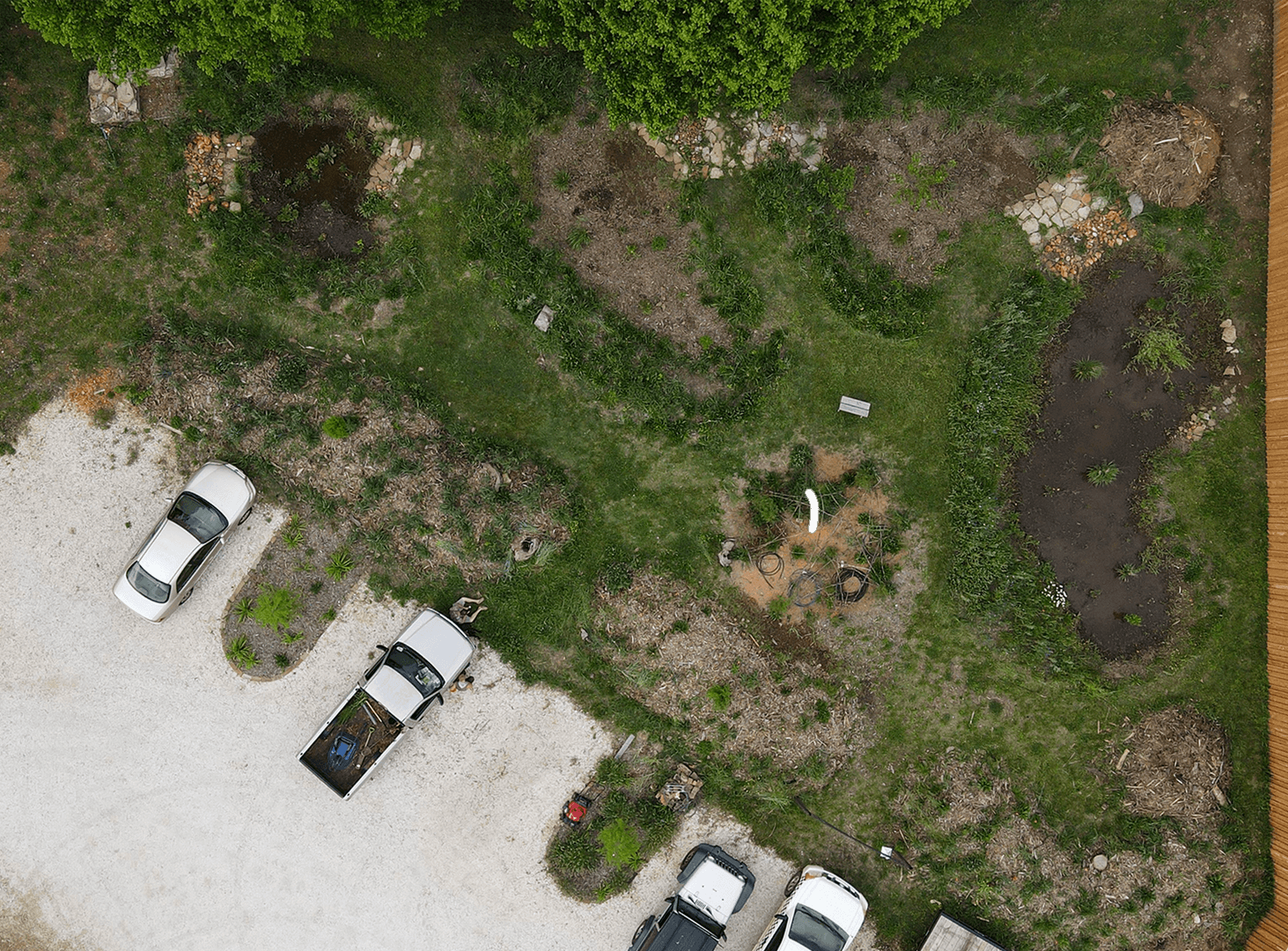
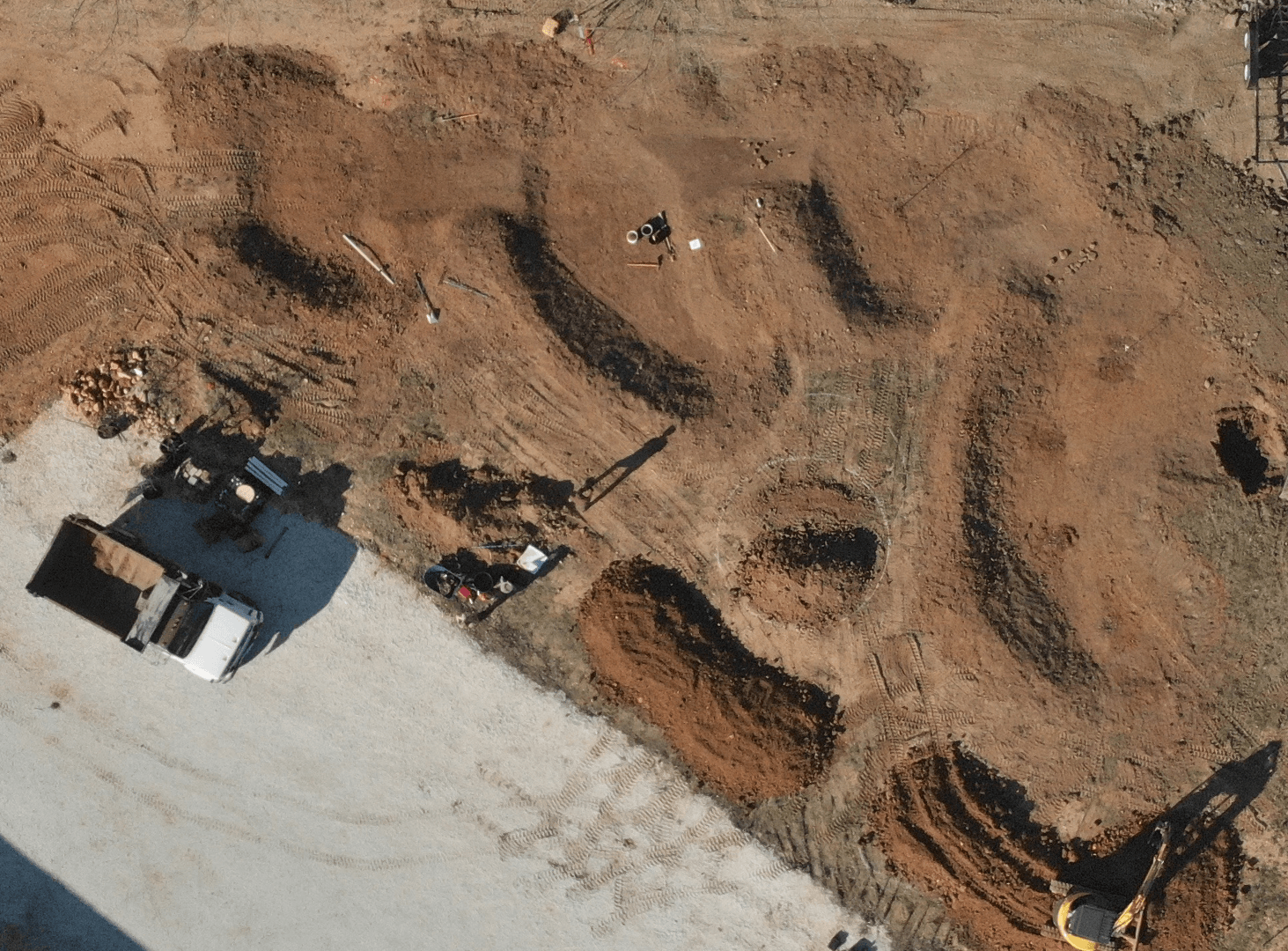
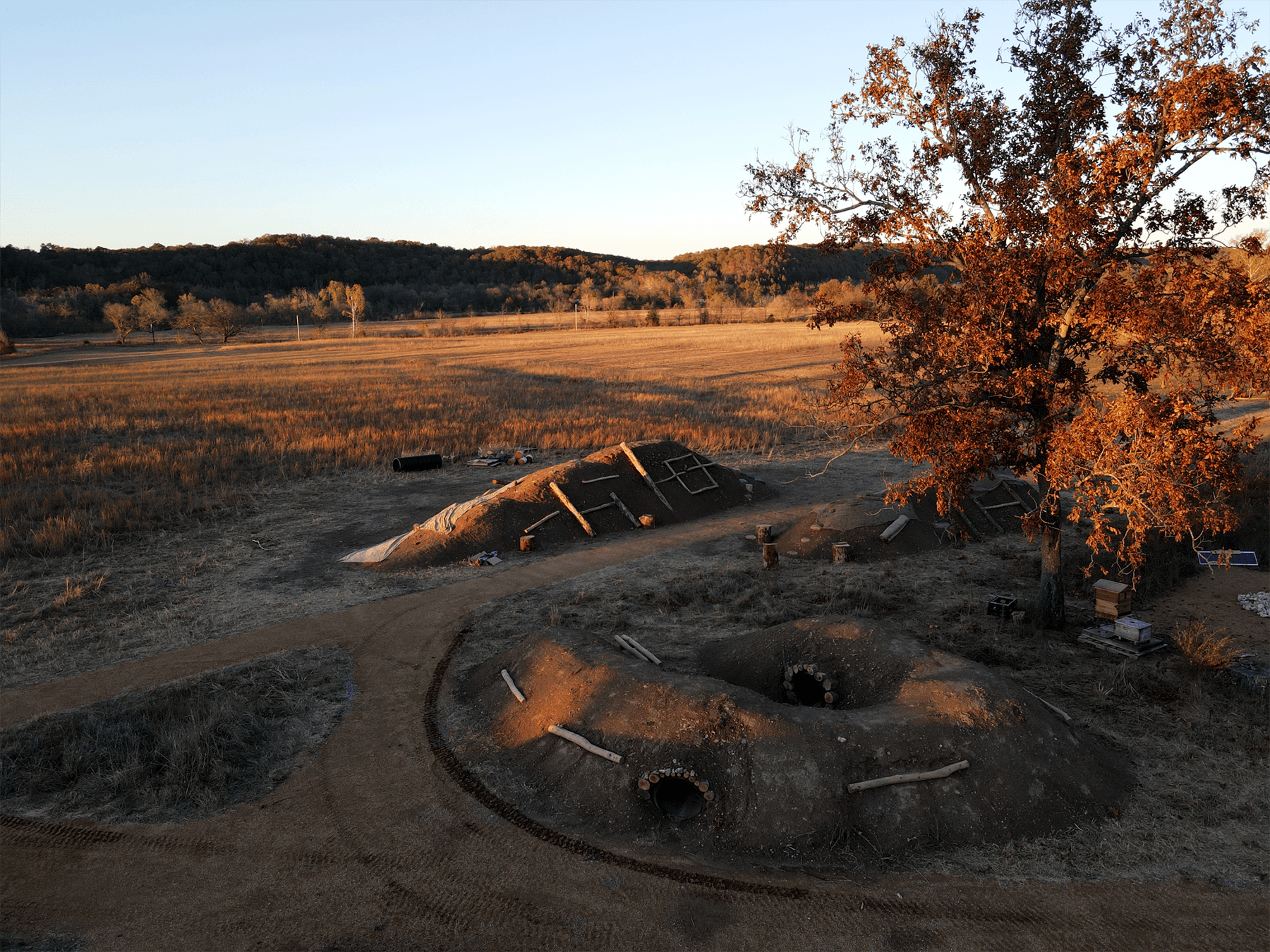
A series of rain gardens and mounds installed for a business’s landscape
We design earthworks and water systems that slow, spread, and infiltrate water—turning runoff into a resource that builds soil, supports vegetation, and restores resilience.
What These Systems Do
Capture and store water on the landscape
Reduce erosion and stabilize vulnerable areas
Increase infiltration and soil moisture
Support long-term plant health and productivity
Core Systems & Applications
Water retention landscapes
Pond and reservoir design
Rain gardens and terrace systems
Erosion control and stabilization
Landscape rehydration strategies
Design Living Systems That Evolve Over Time
A successful landscape is more than a layout—it’s a living system.
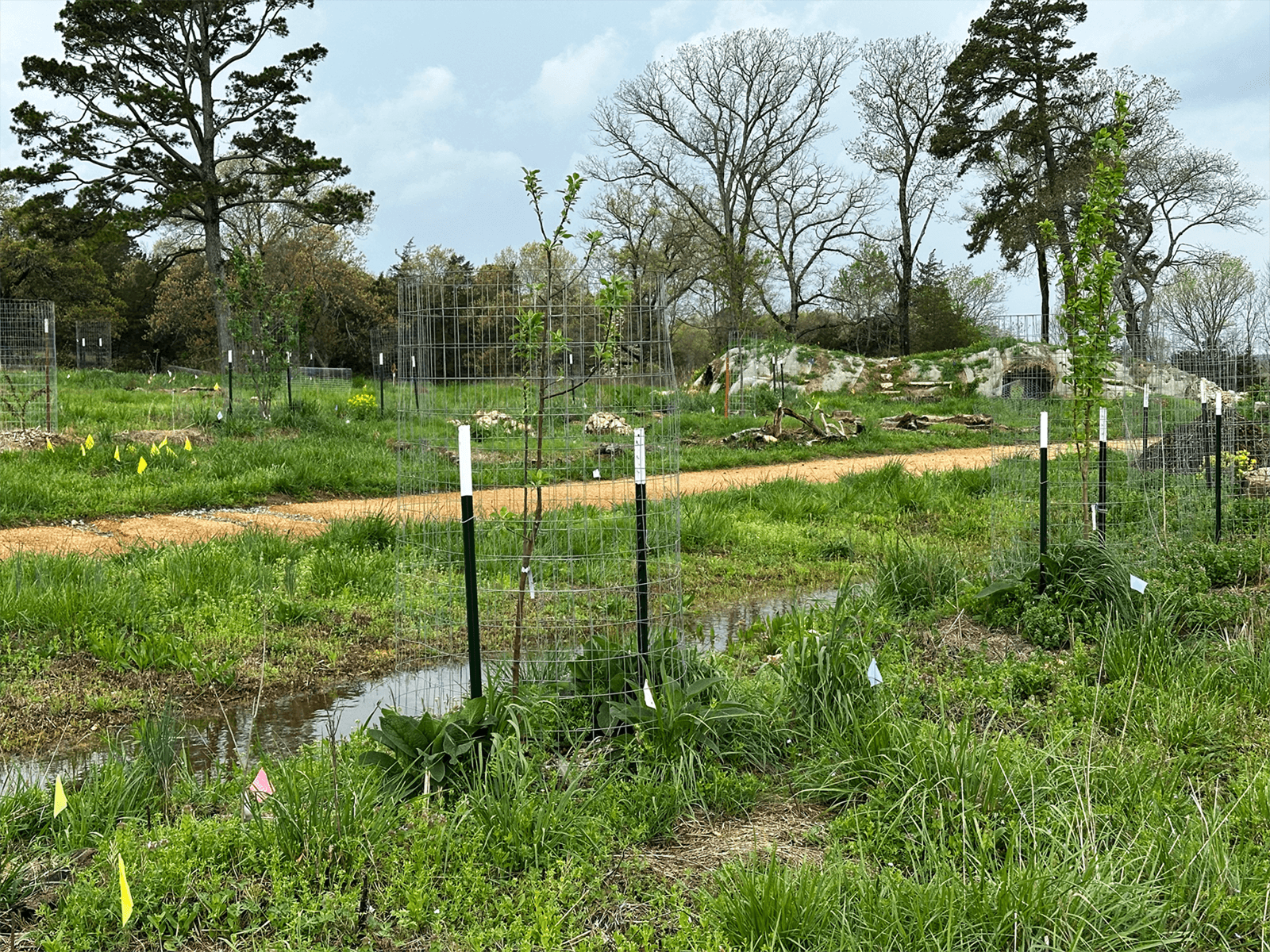
Example: Food forest system in early establishment phase
We design integrated systems that align water, soil, plants, and human use—creating landscapes that become more productive, resilient, and self-sustaining over time.
What This Approach Creates
Landscapes that build soil and retain water
Productive systems that evolve year after year
Integrated plant communities that support biodiversity
Spaces that balance function, beauty, and use
Design Applications
Food forests and perennial production systems
Native habitat restoration
Phased implementation strategies
Species selection and plant guild design
Soil-building and cover cropping systems
These designs are rooted in real site conditions—ensuring they can be implemented, maintained, and adapted over time.
Explore a developing food forest
-
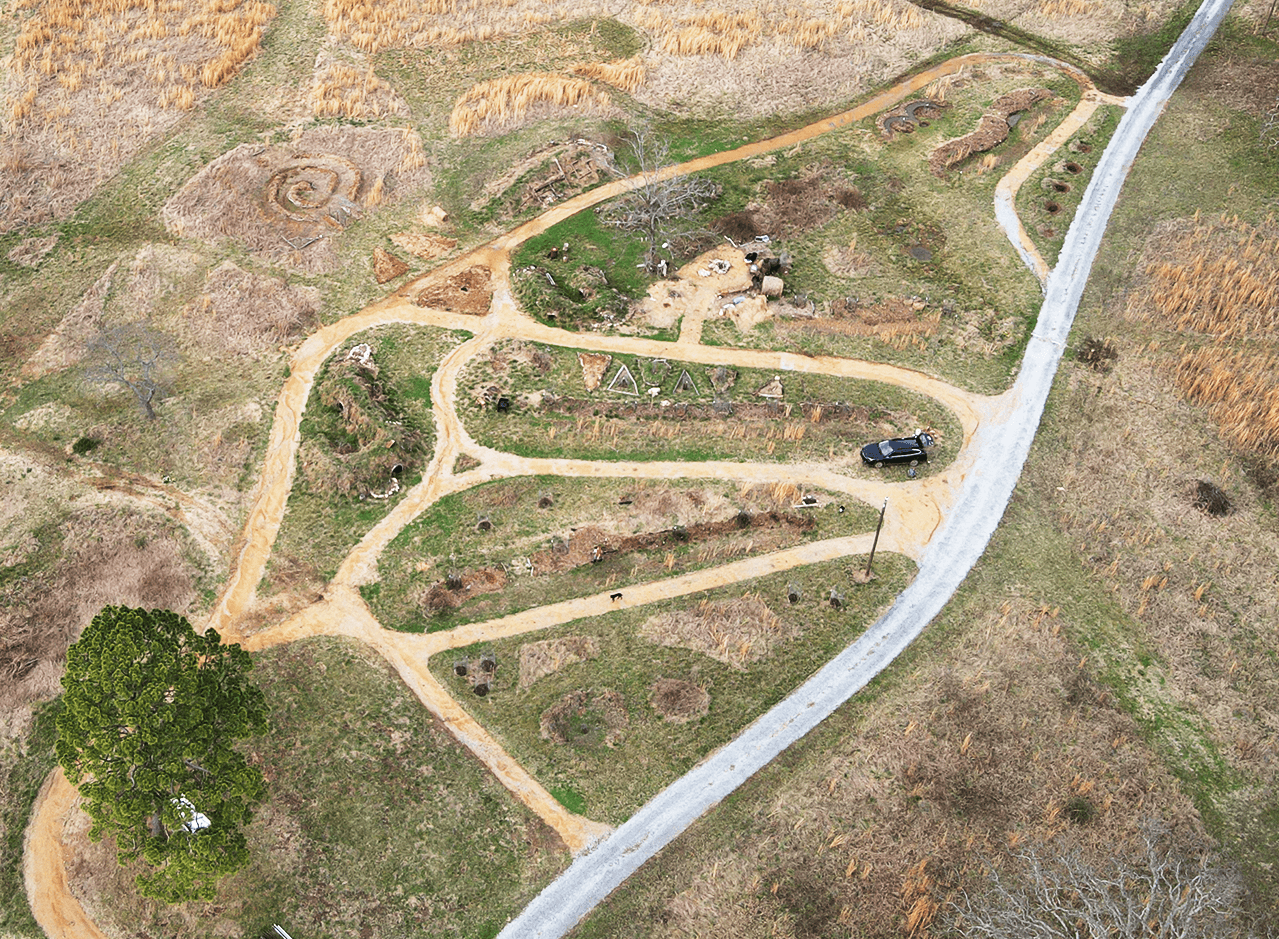
![An aerial image of a food forest polyculture orchard with clear pathways, swales, and other earthworks including a bee bubbler courtyard.]()
Food Forest Layout
The 1.5 acre food forest includes various earthworks to slow, spread and sink water and features several large hugelkultur mounds that will build soil over time. Compost extract, cover crops and supportive nurse plants were used to regenerate damaged soil and support the growing ecosystem.
-
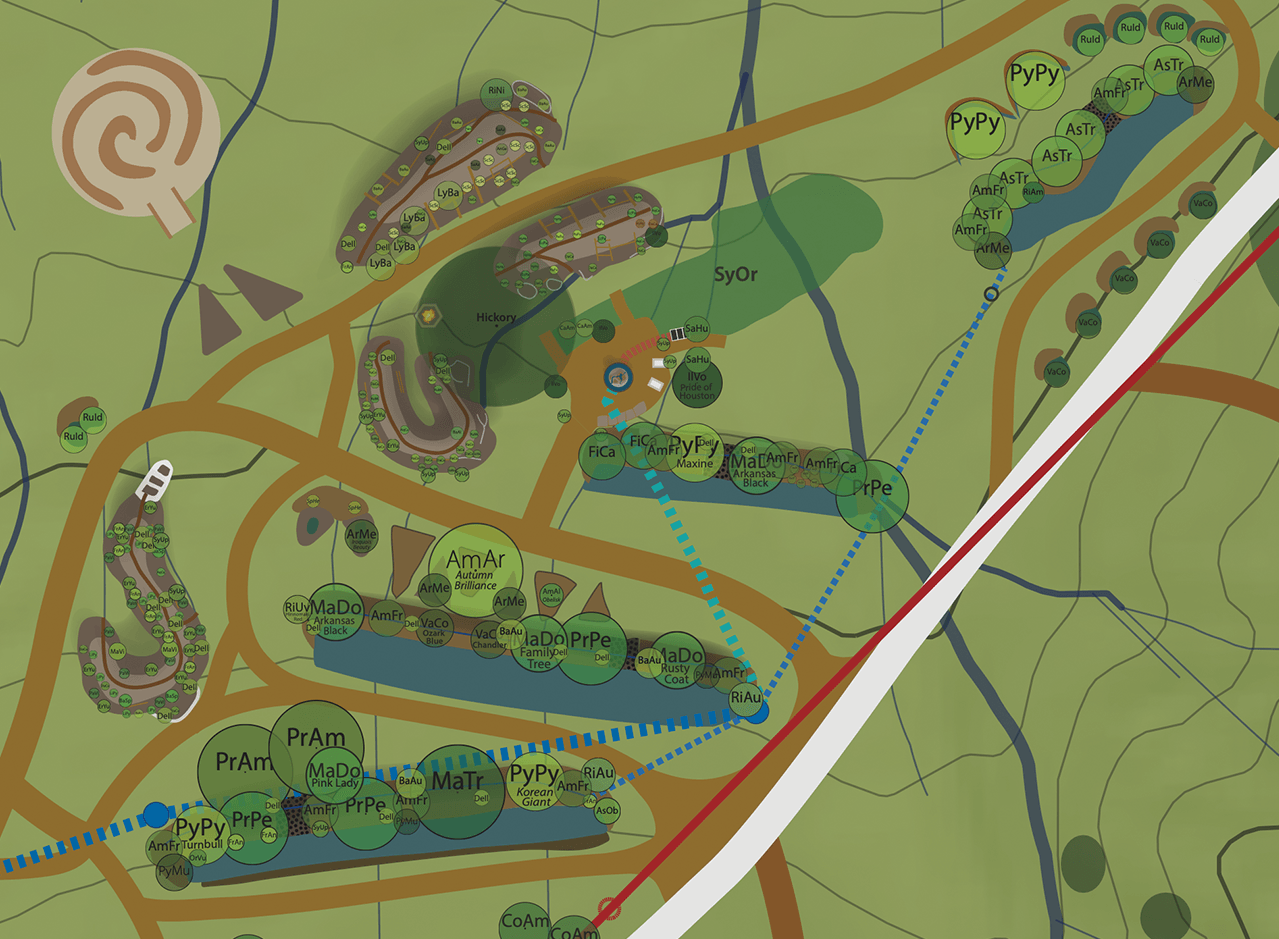
![A digital permaculture food forest design with plant symbols, roads, buried utilities, and earthworks represented to scale.]()
Food Forest Design
The food forest has a high definition digital map for use on mobile devices. This allows landowners, workers, and guests to quickly learn the layout and names of dozens of plants throughout the space.
-
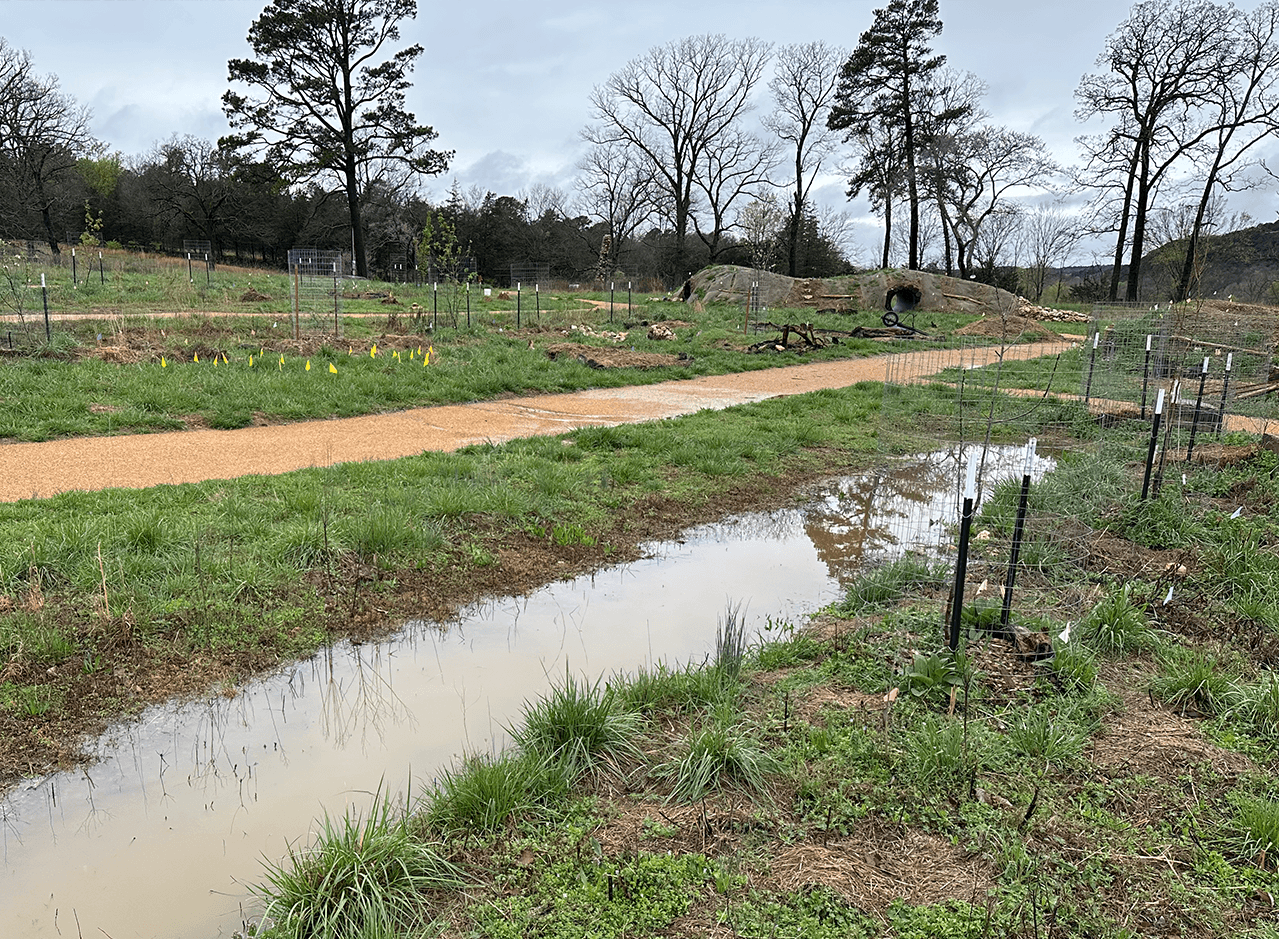
![A swale oin contour filled with water with a path running alongside. The swale has young trees growing with various understory supportive species in a guild.]()
Water harvesting
Throughout the food forest there are various earthworks including swales, terraces, rain gardens, and hugelkultur mounds to passively manage water and infiltrate runoff before it is lost off site.
-
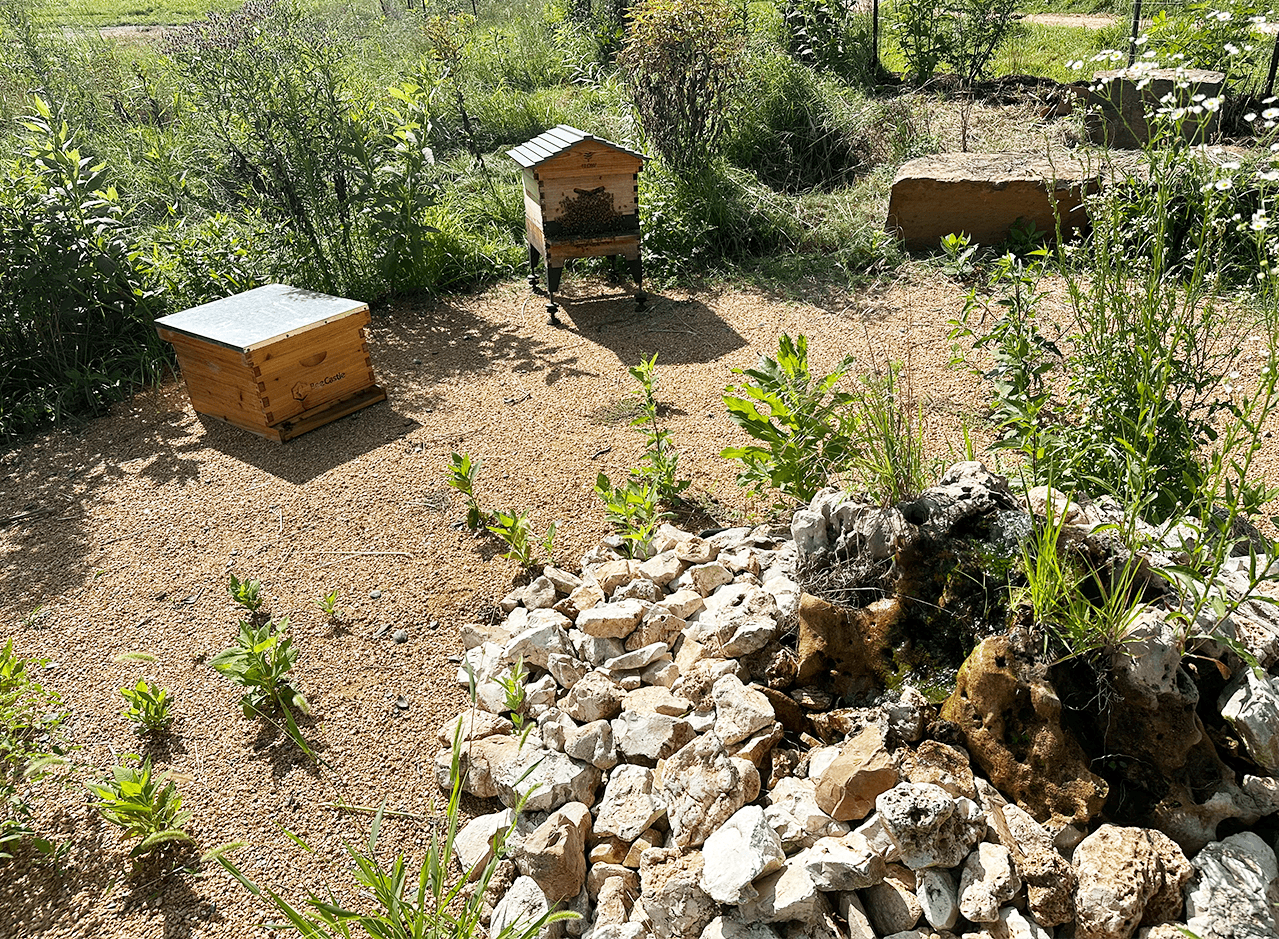
![a courtyard with bee hives and a bee bubbler fountain for thirsty insects. the bee bubbler pours water over rocks to create small pools.]()
Bee Bubbler courtyard
In the center of the food forest, a bee bubbler fountain provides a place where insects can access water. Small pools are created on rock surfaces that allow safe access for thirsty pollinators.
-
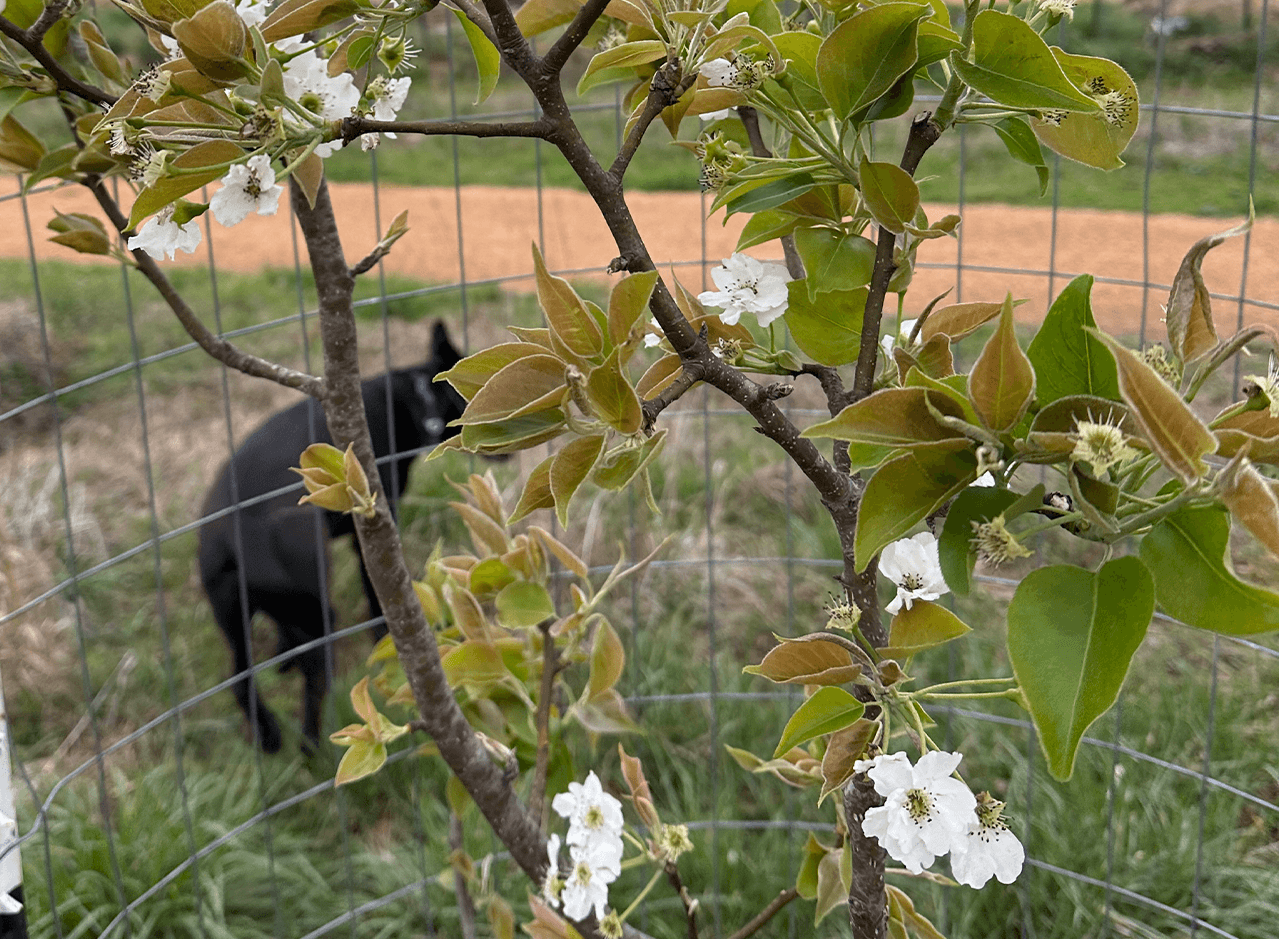
![A close up of pear tree blossoms growing on a tree with a protective cage surorunding it.]()
Region Specific Cultivars
Disease resistant cultivars and species were chosen to reduce risk of damage from pests and disease. Liquid biological amendments were used to boost plant immunity.
-
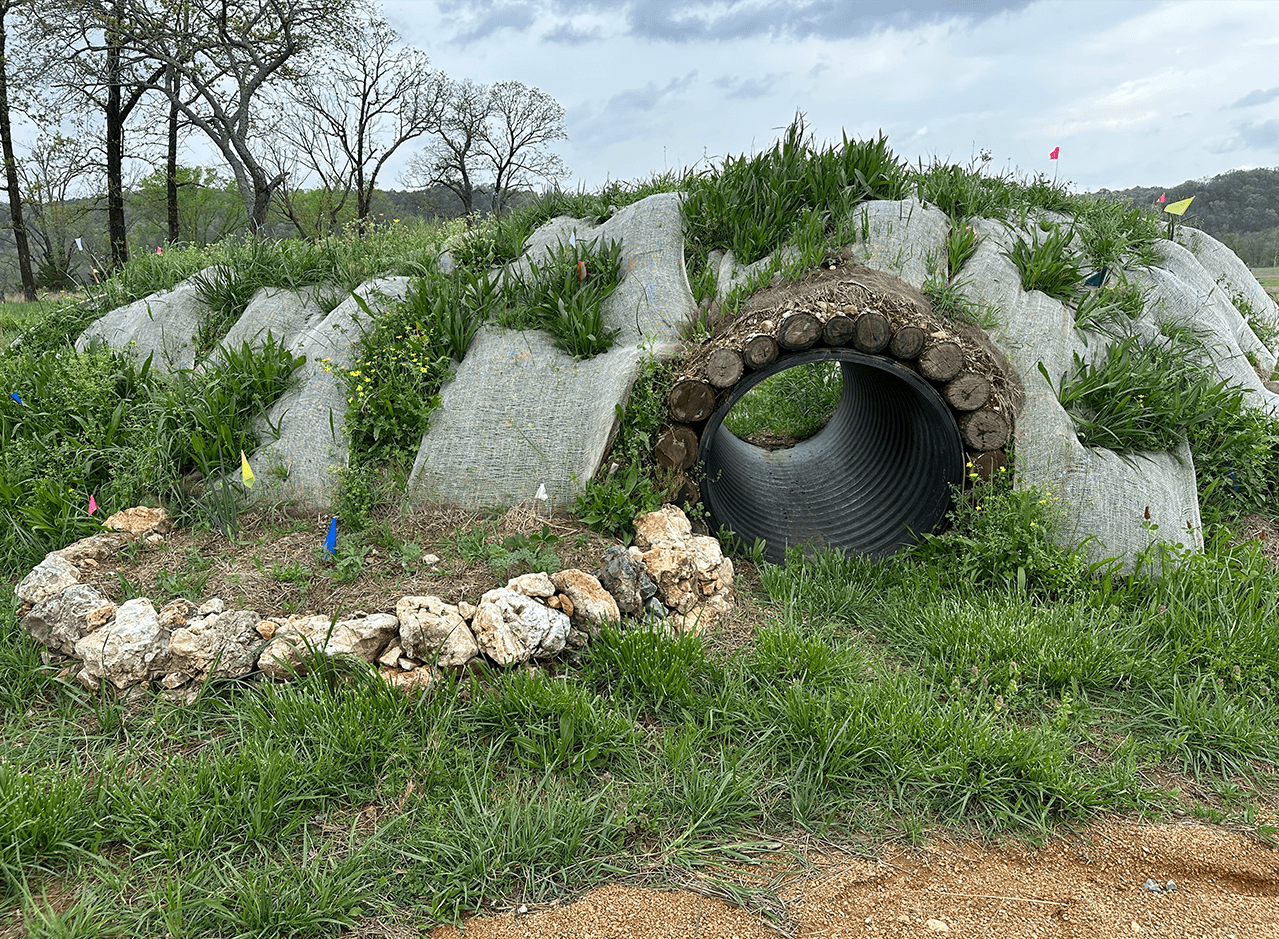
![A large hugelkultur mound with a culvert going through the center and a rock stack garden bed with cover crops growing.]()
Playground Hugelkultur
Excess woody debris and topsoil were used to create large hugelkultur mounds which will create rich soil and habitat over time. A culvert was buried through the mound for kids and animals to play in. A rock stack garden bed extends off of the base of the mound.
-
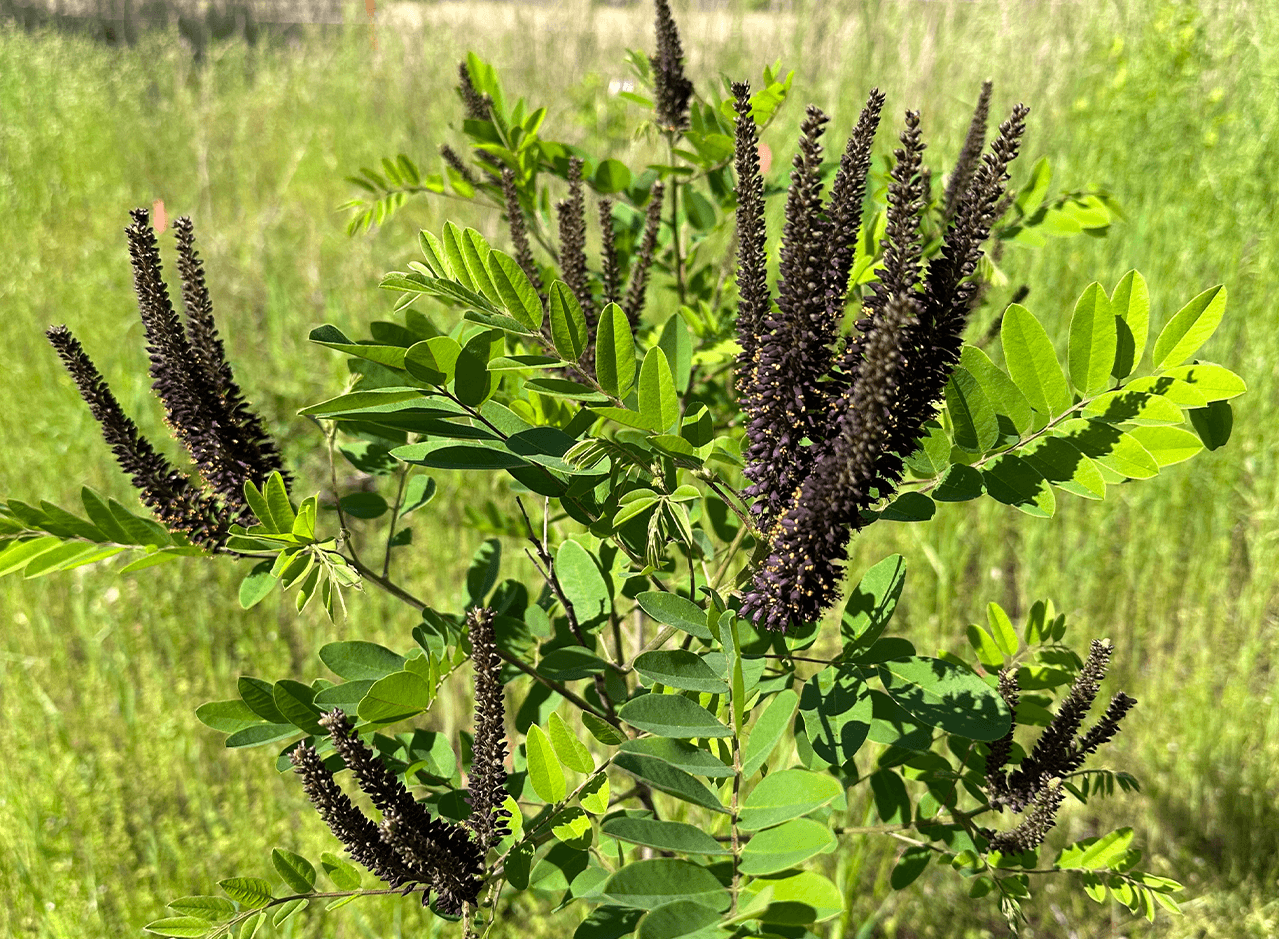
![Amorpha fruticosa false indigo bush close up of leaves and thick purple flower pods.]()
Amorpha fruticosa
False Indigo Bush—A nitrogen fixing shrub used to repair soil, grow biomass, attract pollinators, and nurse young fruit trees with shade during establishment.
-
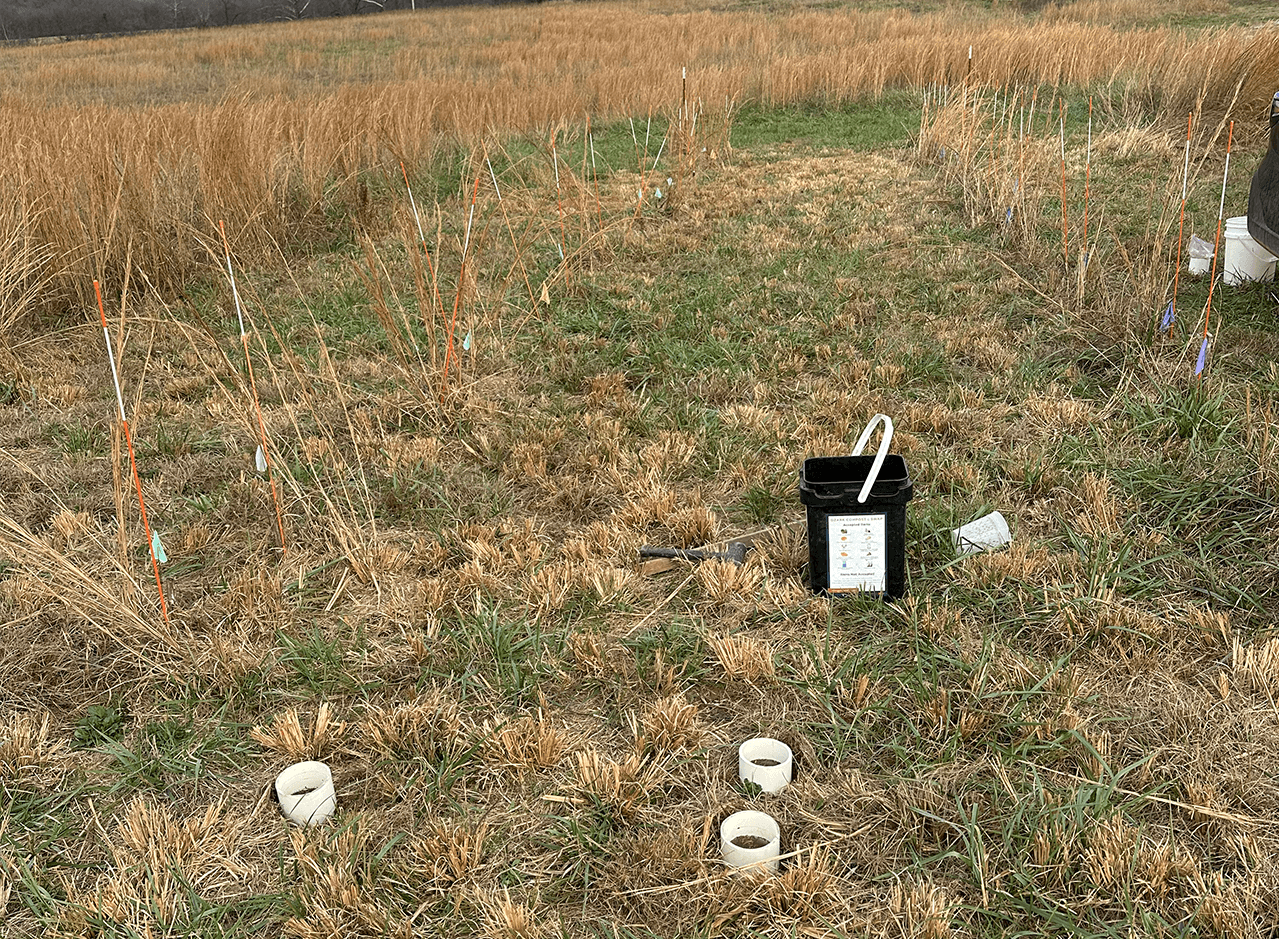
![infiltration test being done on test plots for a soil study testing the growth response of a polyculture prairie to biologically complete compost amendments]()
Soil Study Test Plots
Infiltration tests being taken on plots testing the growth response of a polyculture prairie to biologically complete compost amendments versus control plots treated with water alone.
-
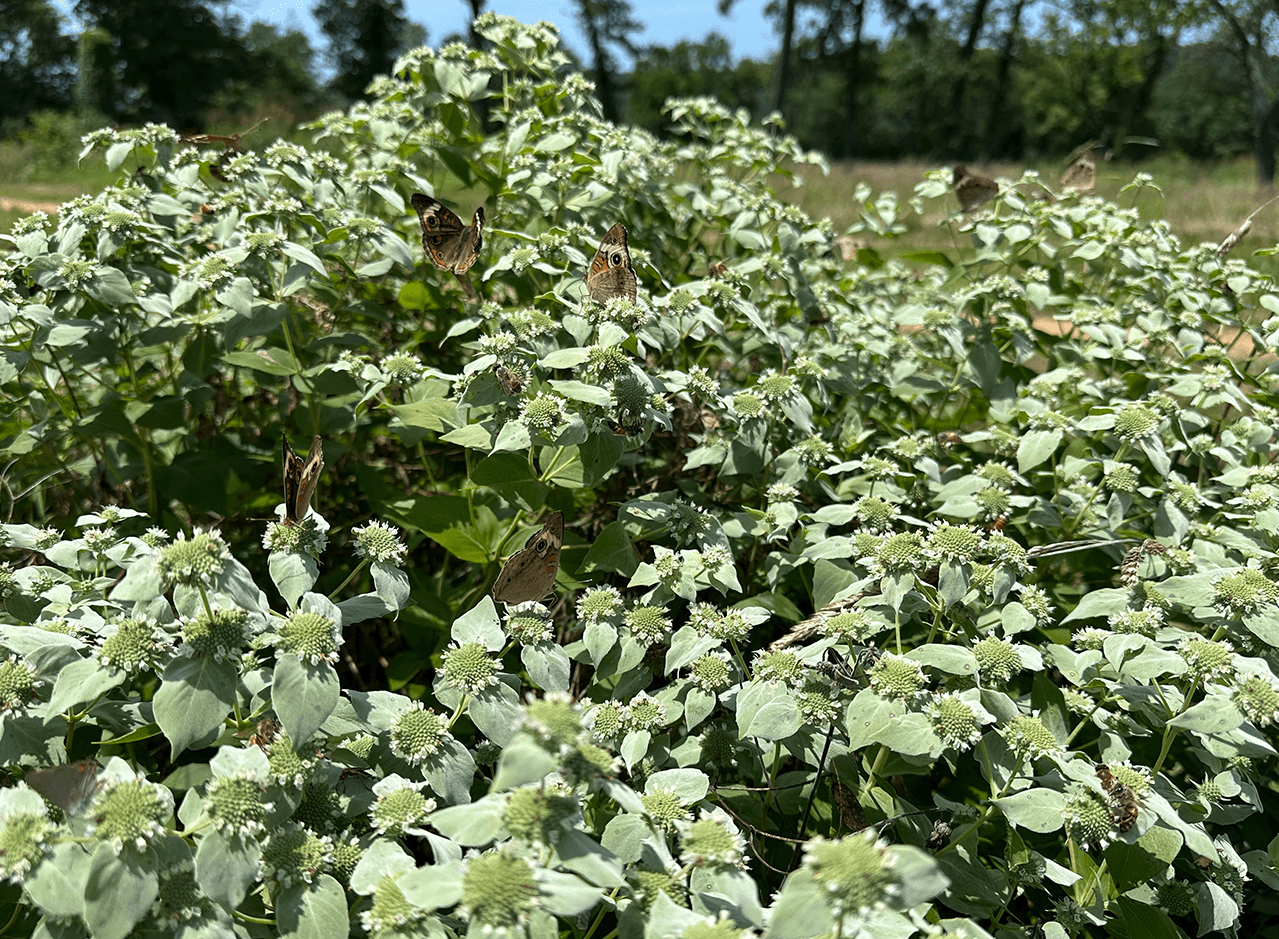
![a mountain mint plant covered in flowers hosts in butterflies, moths, bees, and flies.]()
Pollinator Powerhouse
Mountain mint—Pycnanthemum muticum—covered in flowers hosts dozens of butterflies, moths, bees, and flies. Growing plants for pollinators and predatory insects ensures we will have little workers pollinating plants, preying on pests, and keeping the ecosystem in balance.
Education, Workshops & Outreach
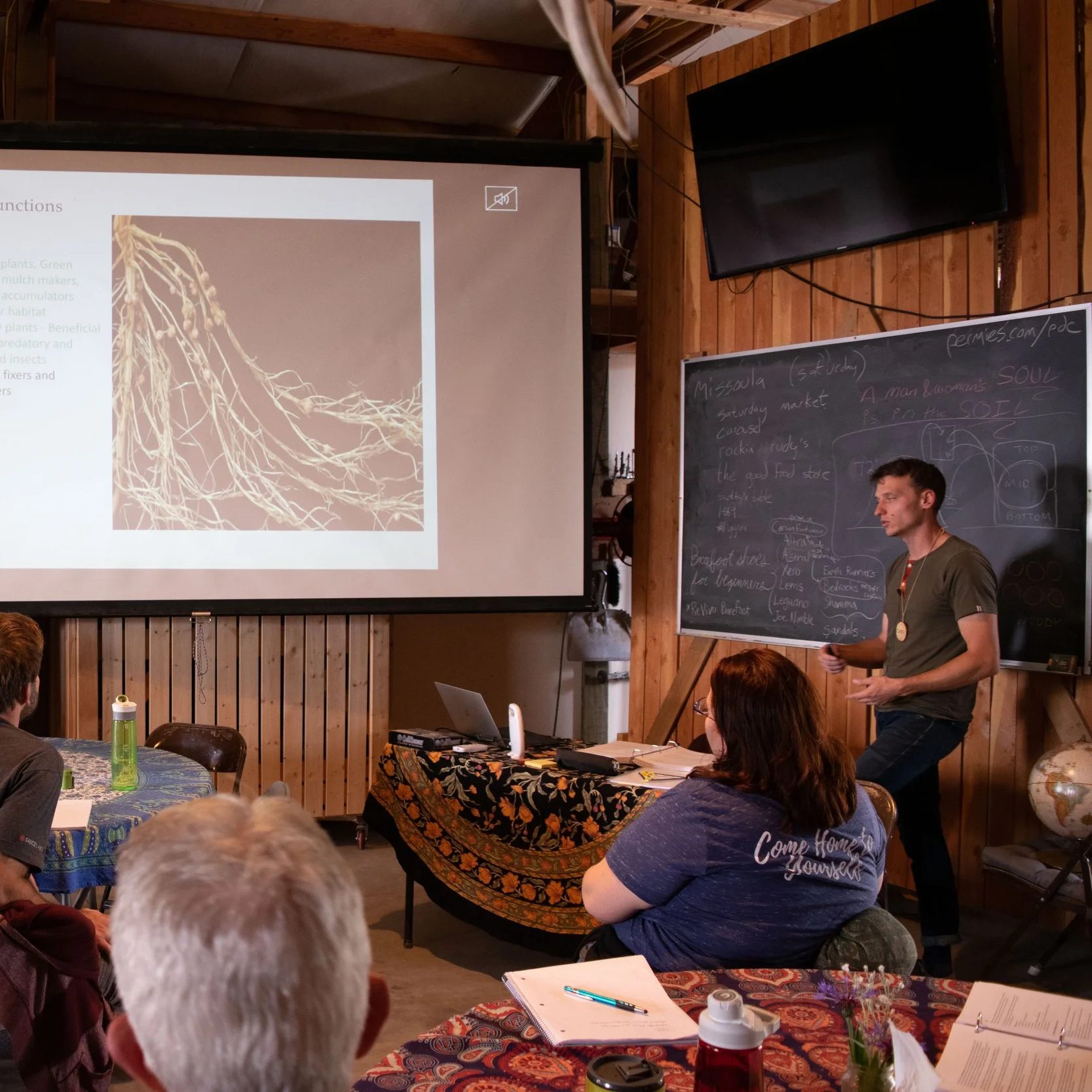
We offer presentations and hands-on workshops focused on practical regenerative land management. Sessions are tailored for farmers, landowners, community groups, conservation organizations, and municipalities seeking systems-based solutions.
Topics Include:
Permaculture & Holistic Management
Soil Health & the Soil Food Web
Composting & Nutrient Cycling
Earthworks & Hydrological Design
Food Forests & Perennial Production
Bioremediation & Streambank Stabilization
GIS and Site Analysis Workflows
Interested in hosting a workshop or booking a presentation?
Inquire About an Educational Event!
Formats range from keynote talks to field-based workshops and multi-day intensives.